When you walk into a restaurant, your eyes might first land on the bar, or maybe the lighting fixtures, but your body notices the seating first. There is a psychology to how we sit in public spaces. The way a booth feels—and crucially, how it looks—sets the immediate expectation for the dining experience. Is this a place to grab a quick burger and a shake? Or is this a spot to linger over a three-course meal and a bottle of wine?
Here in our Los Angeles workshop, we see thousands of yards of vinyl, leather, and fabric pass through our hands. We build frames from scratch and cut foam to specific densities. But the moment a piece truly finds its identity is during the finishing work on the back support. That’s where the style lives.
If you are currently designing a layout for a new bistro in West Hollywood, refreshing a diner in Santa Monica, or overhauling seating for a hospitality project out of state, the specific tufting style you choose changes everything. Let’s look at the three big contenders we fabricate most often: Channel, Diamond, and Biscuit.
Channel Tufting: The Vertical Statement
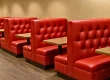
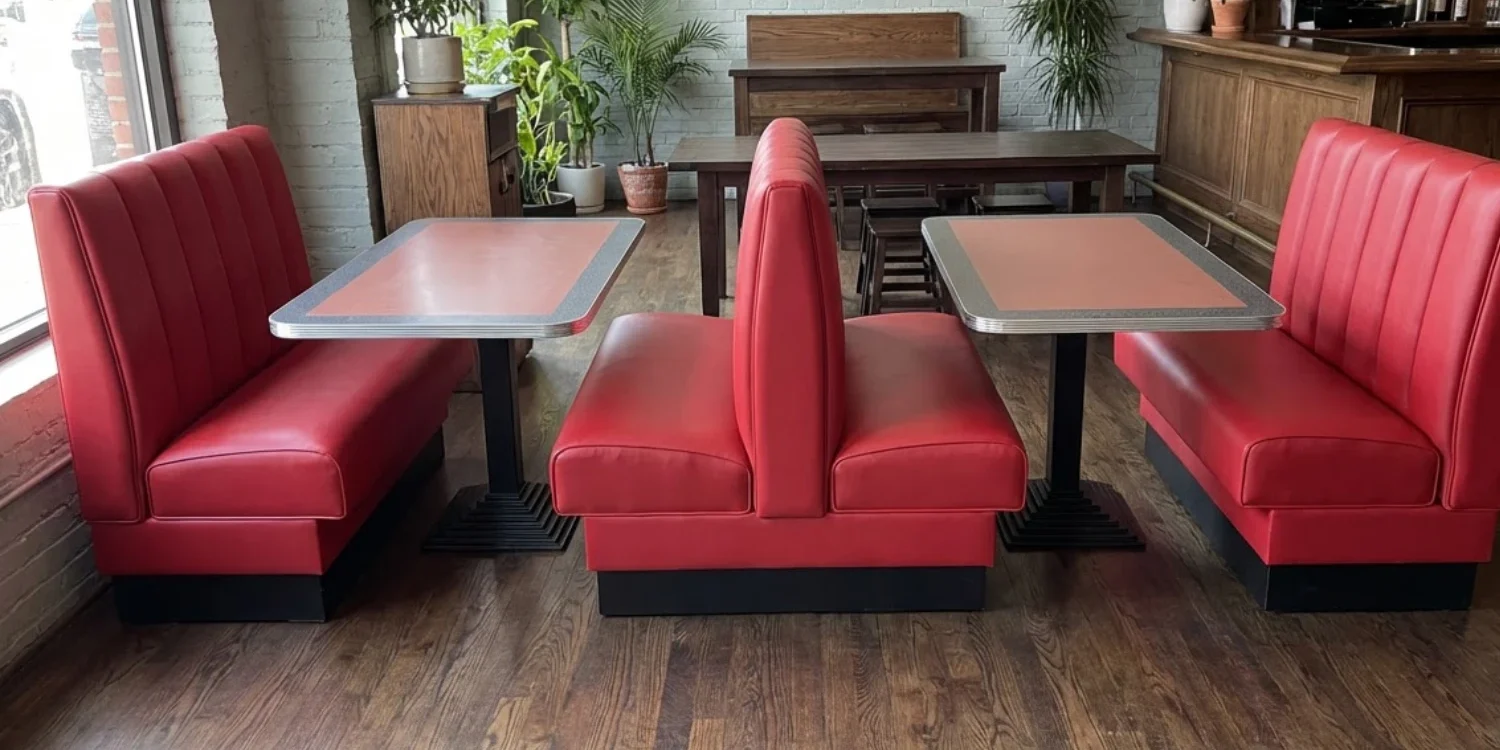
If you look at the bright red booths in the photo above, that is classic channel tufting. It’s defined by vertical (or sometimes horizontal) stitched lines that create puffed “channels” of padding. This style is incredibly versatile because it relies on geometry, not fussiness.
The most common application we see for vertical channeling is the retro diner aesthetic. It’s pure 1950s nostalgia. The vertical lines draw the eye upward, which can make lower booths feel a bit grander, and the padding is usually firm and supportive. It’s perfect for high-traffic areas because there are no buttons to pop off and fewer crevices for crumbs to hide in compared to diamond tufting.
However, don’t pigeonhole channel styling just for burger joints.
When we use a rich, dark velvet or a high-end distressed leather instead of bright red vinyl, vertical channeling suddenly becomes very Art Deco. It shifts from “diner” to “speakeasy.” We’ve done installations for upscale bars in downtown L.A. where floor-to-ceiling channel upholstery creates a sound-dampening wall that feels incredibly intimate and luxurious. If your vibe is sleek, linear, and modern, or if you are aiming for that Great Gatsby glam, channel tufting is often the way to go.
The Classic Diamond Tuft
This is the heavyweight champion of traditional upholstery. Deep button diamond tufting—often called Chesterfield style—is labor-intensive artisan work. We aren’t just sewing lines here; we are folding the fabric, pulling it tight through the foam to the frame backing, and securing it to create those iconic deep recesses.
Diamond tufting screams permanence and luxury. It belongs in a steakhouse with mahogany walls, a high-end hotel lobby, or an English pub-style restaurant.
The visual texture of diamond tufting plays with light beautifully. Because the fabric folds and dives into the buttons, it creates shadows and highlights that flat upholstery just can’t match. If you are using a material with a bit of sheen, like a top-grain leather or a crushed velvet, the effect is stunning. It tells your customers that you have paid attention to detail.
There is a practical consideration here for business owners, though. Because of the deep crevices, diamond tufting requires a bit more maintenance to keep clean than a flat back or channel back. Does that mean you shouldn’t use it? Absolutely not. It just means it’s better suited for a lounge area or a fine dining table than it is for a high-turnover breakfast spot where syrup might get involved.
Biscuit Tufting: The Modern Grid
Biscuit tufting is the younger, cooler cousin of the bunch. It uses a square grid pattern, stitched either with buttons (button biscuit) or just with seams (blind biscuit). It creates a structured, architectural look that is very popular in mid-century modern designs and contemporary office spaces.
While diamond tufting feels old-world, biscuit tufting feels organized and clean. It’s fantastic for lighter, airy spaces like a brunch spot in Silver Lake or a modern coffee shop.
We love recommending this style when a client wants texture but finds the diamond style too “stiff” or “stuffy.” Biscuit tufting provides that necessary comfort and padding—it essentially creates little pillows of support—but the clean 90-degree angles keep the design feeling current. It works exceptionally well with textured fabrics like tweeds or linens, which give a residential, cozy feel to a commercial space.
Customizing for Your Space
The best part about custom furniture is that you aren’t stuck with what’s in a catalog. We can manipulate these styles to fit the ergonomics of your specific clientele.
For example, we recently worked on a project where the owner loved the look of channel tufting but wanted the extra plush comfort usually associated with diamond tufting. We were able to adjust the foam density and the depth of the channels to create a hybrid feel that looked sleek but sat soft.
We also consider the “crumb factor” and durability for you. If you are running a family-friendly restaurant but want a high-end look, we might steer you toward a blind tuft (where the shape is stitched, but there are no actual buttons). This gives you the visual elegance of the design without the hardware that children love to pull on.
One detail people often overlook is the “headroll.” You can combine styles. A booth might feature a plain, smooth back for easy cleaning but have a channel-tufted headroll at the top for that pop of design flair. It’s a great way to balance budget with aesthetics.
Material Matters
The style of the back is only half the equation; the material you wrap it in dictates the final personality of the booth.
Vinyl: The undisputed king of durability. Modern contract-grade vinyls are incredible—they can mimic the grain of leather or the weave of fabric while being waterproof and antimicrobial. For those deep red channel booths in the photo, vinyl is the only choice that makes sense. It’s tough, easy to wipe down, and holds its shape for years.
Leather: Leather breathes. It warms up to body temperature. As it ages, especially on a diamond-tufted back, it develops a patina that tells a story. We often use leather for booths in private clubs or executive areas of restaurants where the tactile experience is part of the service.
Fabric: Commercial-grade fabrics (often treated with Crypton or similar stain repellents) offer the widest range of colors and patterns. A biscuit-tufted booth in a soft gray wool blend feels incredibly inviting, almost like a sofa in someone’s living room. This “resimercial” (residential + commercial) trend is huge in Los Angeles right now.
Let’s Build Something Unique
Whether you are matching an existing set of booths or building out a completely new floor plan, the details make the difference. Upholstery isn’t just covering a sponge with cloth; it’s engineering comfort and atmosphere.
We handle everything right here in the area. From building the solid wood frames to the final installation at your venue, we control the quality every step of the way. If you aren’t sure if your space needs the vertical lift of a channel back or the classic anchor of a diamond tuft, give us a call or stop by the shop. We can show you samples, let you sit on different foam densities, and sketch out a design that fits your brand.
Your furniture should work as hard as you do. Let’s make sure it looks good doing it.