We have all been there. You walk into a stunning new restaurant in downtown Los Angeles or a trendy gastropub in Culver City. The aesthetic is incredible—exposed brick walls, polished concrete floors, high ceilings, and an undeniable industrial-chic vibe. It looks amazing on Instagram. But the moment you sit down to talk to your date or your business partner, you realize the problem. You can’t hear a thing.
Open floor plans have dominated commercial design for over a decade now. They maximize flow, let in natural light, and create a sense of energy. However, that lack of walls and soft surfaces turns many dining rooms into echo chambers. This is where strategic furniture design stops being just about comfort and starts becoming an architectural solution. Specifically, we are talking about the role of custom high-back booths.
When we work with restaurant owners here in LA, usually the first thing they ask about is fabric durability or color matching. And while those are critical, we often steer the conversation toward the *structure* of the seating itself. High-back booths aren’t just a retro design choice; they are sound barriers.
The “Room Within a Room” Effect
Think about the psychology of entering a busy space. If you are there for a quick coffee, a bar stool or a communal table is fine. But if you are settling in for a two-hour dinner, people crave intimacy. They want to feel anchored.
A standard chair leaves you exposed to the entire room. Your back is to traffic, and your conversation drifts into the neighbor’s space. High-back seating changes that dynamic instantly. By raising the back of the booth just a few inches above the standard height—often going up to 42 or even 48 inches—we create a physical shield.
This design strategy essentially builds a “room within a room.” Structural wood framing, topped with dense foam and quality upholstery, acts as a dampener. It catches the acoustics of the conversation happening at the table and keeps it there, while simultaneously blocking out the clatter of silverware and chatter from the rest of the venue.
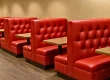
We recently worked on a project near Santa Monica where the owner was concerned that their open kitchen was too loud for the dinner crowd. Instead of building expensive drywall partitions that would ruin the view, we designed a series of channel-tufted, high-back banquettes running down the center of the room. It broke up the sound waves traveling across the space and instantly made the dining experience more personal. It’s a subtle adjustment that customers feel, even if they don’t explicitly realize why they are more comfortable.
Designing for Density without Crowding
There is a misconception that larger furniture makes a space look smaller. In reality, disorganized furniture makes a space look small. When you have a sea of tables and chairs, the visual clutter can be overwhelming.
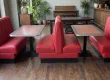
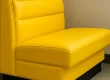
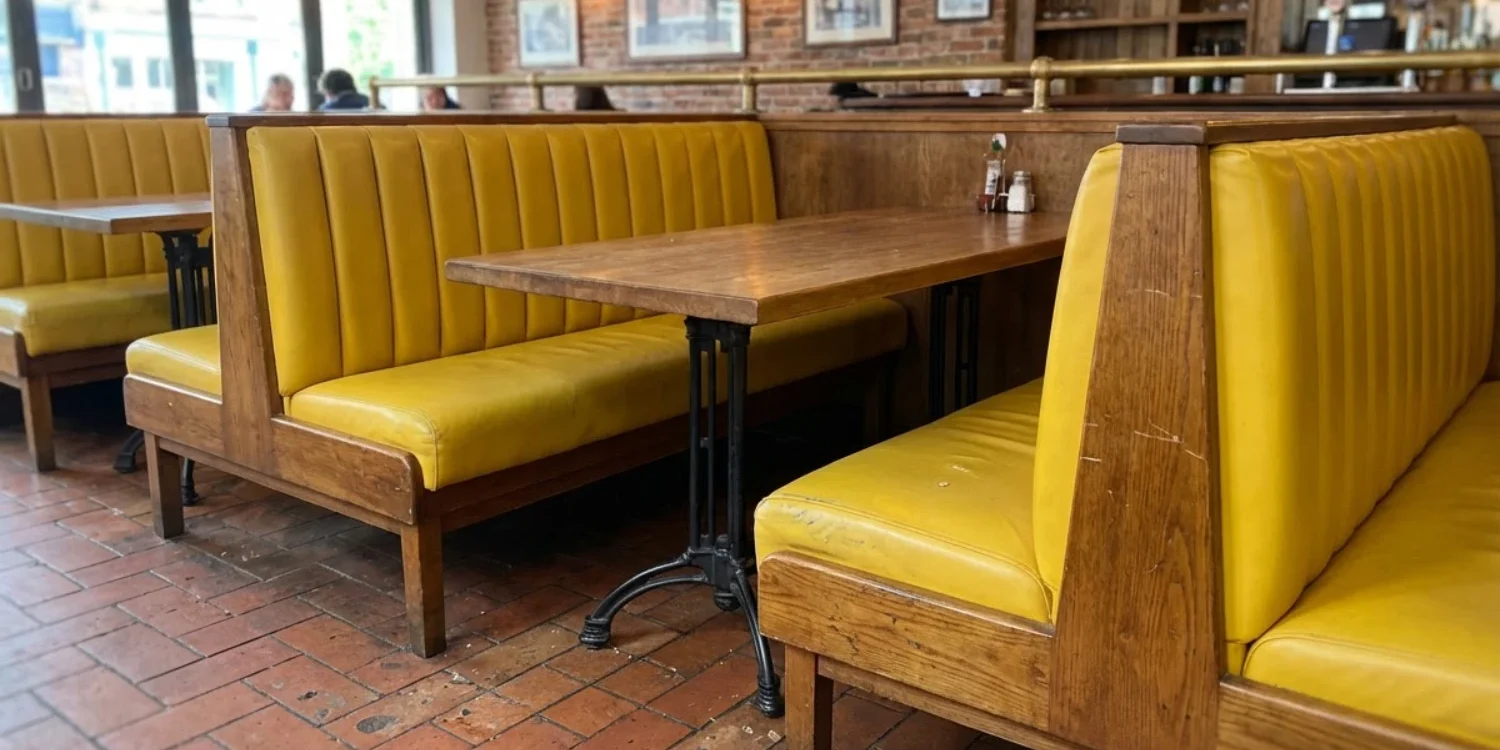
Booths, particularly those with substantial backs and custom millwork, provide visual anchors. They organize the floor plan. In the image featured here, you can see how the yellow booths define the walkway. The light wood backing creates a clean, continuous line that guides the eye through the restaurant. If those were just tables and chairs, the area would look chaotic.
For our commercial clients in Los Angeles, space is money. The rent per square foot in this city generally demands meaningful efficiency. High-back seating allows you to place parties closer together without them feeling crowded. You can have two tables back-to-back, separated only by the booth structure, and the guests will feel completely private. If those were chairs, those two parties would be bumping elbows.
We often fabricate booths with a total thickness of just a few inches at the top cap to maximize the table space, while flaring the base slightly for comfort. It’s a balancing act that requires precise measurements during the frame-building stage in our workshop.
Customization Options for Noise Control and Style
When you buy factory-made furniture, you are stuck with whatever foam density and fabric they chose to cut costs. When we build custom handmade furniture, we get to engineer the piece for the specific environment it will live in.
If your venue creates a lot of high-frequency noise (clinking glasses, high-pitched laughter), we might recommend a plush velvet or a textured woven fabric for the backrest because those materials absorb sound better than smooth vinyl. However, we know a lot of high-traffic bars need the wipe-ability of vinyl. In those cases, we can channel-tuft the vinyl or use deep button tufting.
Why does tufting matter? It’s not just for looks. A flat, tight surface reflects sound like a drum. A tufted surface breaks up the sound wave because it is uneven. It creates more surface area to trap noise.
We can also manipulate the height. While a 36-inch back is standard, pushing that to 42 inches creates a “head rest” level privacy zone. Going all the way to 54 inches creates a true VIP feel. We have done specialized booths for lounges in West Hollywood where the sides curve inward (wingback style), which further cocoons the guests. It creates a sense of exclusivity that people are often willing to pay a premium for.
It’s Not Just for Restaurants
While hospitality is a huge part of what we do, we are seeing this trend move into residential spaces and offices as well. The “open concept” home is beautiful, but families are realizing they have nowhere to hide from the noise of the TV or the dishwasher.
We have started building more kitchen banquettes that borrow these principles. Instead of a simple bench, homeowners are asking for upholstered backs that rise higher against the kitchen island or the wall. It turns the breakfast nook into a quiet corner for morning coffee or homework.
Similarly, in corporate lobbies or open-plan offices, custom upholstered booths are replacing the stiff, uncomfortable waiting room chairs. It gives clients a place to take a phone call or have a quick informal meeting without needing to book a conference room.
The Construction Process Matters
Achieving this level of privacy and durability requires more than just stapling fabric to plywood. The internal structure is what keeps the booth standing straight after thousands of people have leaned back on it.
Our process starts with hardwood frames. We don’t use particle board for structural elements because it eventually crumbles under the stress of daily commercial use. Once the frame is built, we look at the suspension. For a booth that is going to be used for dining, you want a seat that is firm but supportive—often using high-density foam layered over a specific spring system or webbing. If the seat is too soft, people sink in and can’t reach their food comfortably. If it’s too hard, they won’t stay for dessert.
The upholstery stage is where the personality comes out. Slipcovers can be a great option for easier cleaning, but for that tailored, high-end look shown in the photo, tight upholstery is usually best. This involves stretching the material perfectly taut so there are no wrinkles, ensuring the lines remain crisp for years.
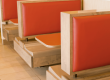
We also have to consider the “crumb gap.” It sounds funny, but in the restaurant industry, it is a serious detail. We often design a pass-through space between the seat and the backrest so that staff can easily sweep crumbs out. If you have ever tried to clean a booth that is sewn shut at the corner, you know the nightmare it creates.
Reupholstery Considerations for Existing Booths
Maybe you already have high-back booths, but they are looking tired, or the foam has collapsed. You don’t always need to tear everything out and start from scratch. Since we specialize in both new builds and reupholstery, we can often salvage the existing framework.
However, if your current booths are low-back and you are trying to solve a noise issue, reupholstery alone won’t fix the height problem. But, we can sometimes modify existing frames to add height, depending on how they were originally constructed.
We often go onsite to inspect the current furniture. We check if the wood describes are still sound. If they are, we can strip them down, add new high-resiliency foam, build up the back structure, and apply new fabric. This is often a more sustainable and cost-effective route than buying entirely new units, and it keeps quality material out of the landfill.
Finding the Right Balance for Your Space
Does every seat in the house need to be a high-back booth? Probably not. The best floor plans have variety. You want some energy and movement. A mix of high booths along the perimeter or creating central spines, combined with loose tables and chairs in the middle, usually offers the best flow.
The goal is to offer choices. Some nights, a customer wants to be seen; they want to be in the middle of the action at a central table. Other nights, they want to disappear into a comfortable corner and focus solely on their company. High-back seating gives you the inventory to satisfy both types of customers.
Whether you are looking to outfit a new restaurant in Silver Lake, update a hotel lobby in Downtown, or just want a custom banquette for your home in Pasadena, thinking about vertical space is key. Don’t just look at the footprint on the floor; look at the volume of the room. By utilizing height and quality upholstery, you can control the sound, improve the flow, and drastically increase the comfort level of your space.
If you are curious about how custom seating could fit into your floor plan, or if you need to upgrade your current setup to better handle the noise of a busy room, let’s take a look at your layout. We can walk through fabric options, foam densities, and structural designs that fit your specific aesthetic and operational needs.